

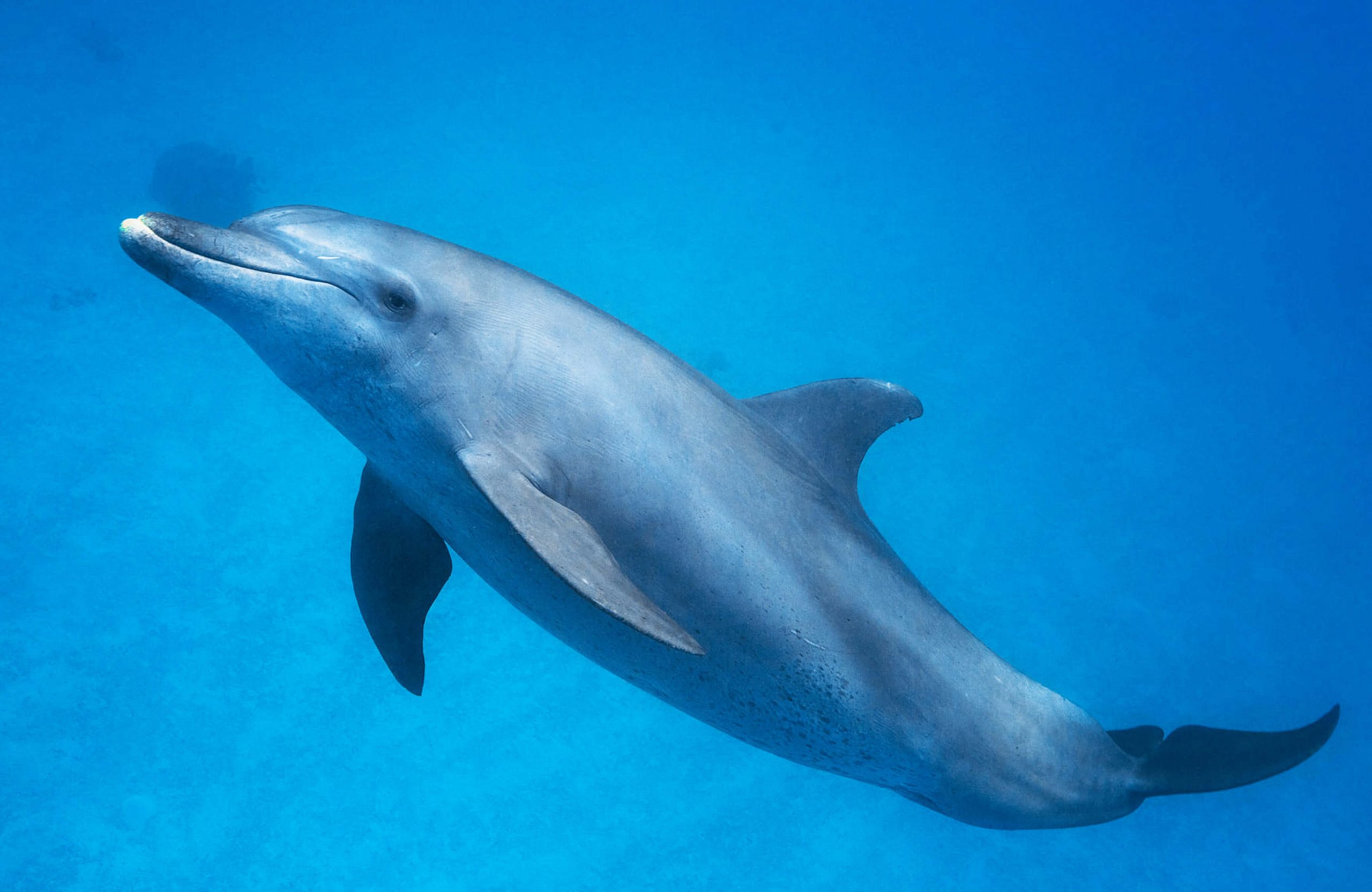
Bottlenose dolphin in Tenerife
Tursiops truncatus · Delfín mular · Großer Tümmler
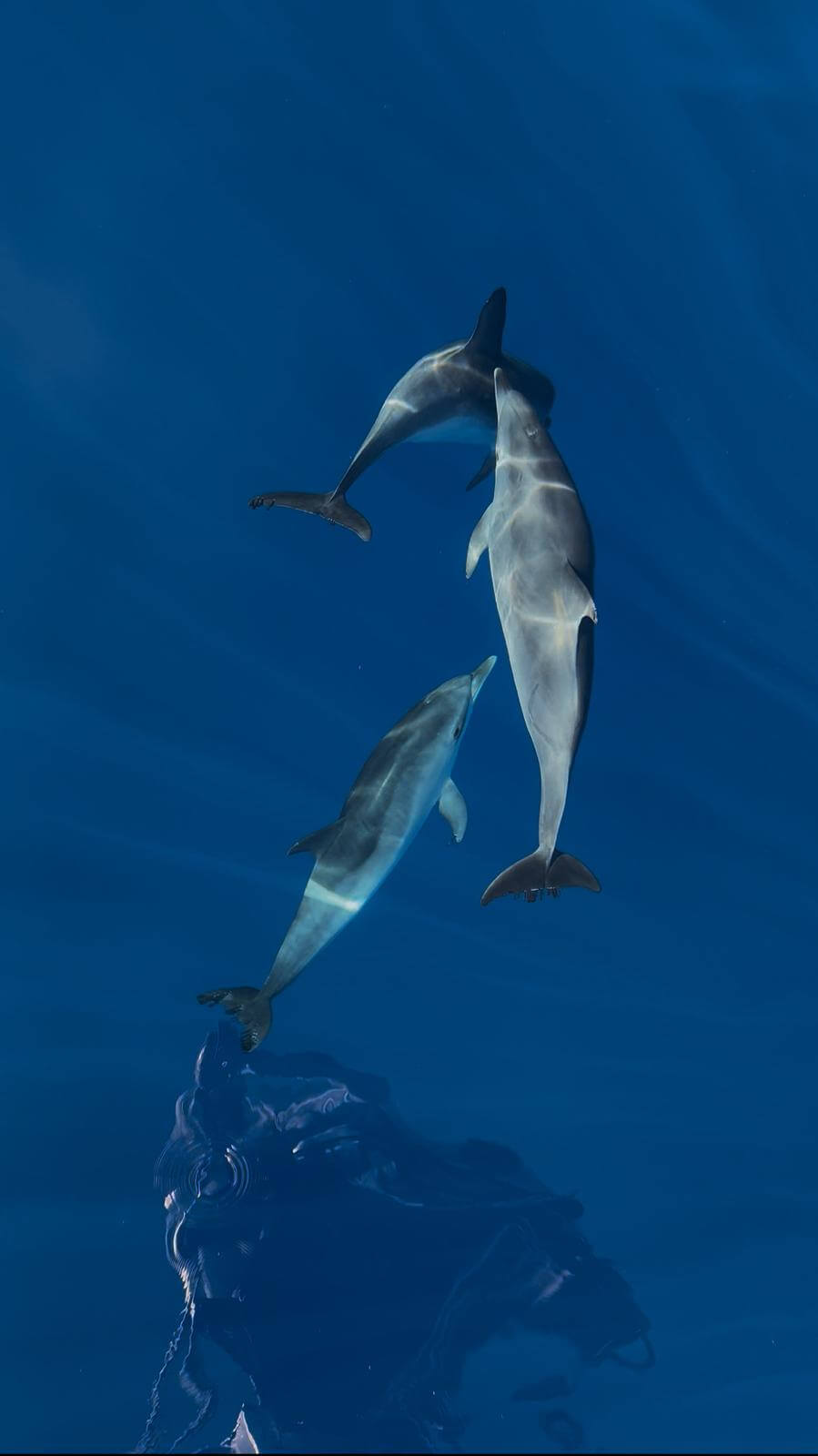
Species fact file
The most recognisable dolphin in the Atlantic, right off Costa Adeje
If there is one animal that most people picture when they think of a dolphin, this is it. The bottlenose dolphin has starred in TV series, documentaries and marine parks the world over — and in Tenerife you can see it in the wild, where it belongs.
Known scientifically as Tursiops truncatus, the bottlenose dolphin is one of the most frequently encountered cetaceans on our departures from Puerto Colón. They show up throughout the year off the southwest coast of Tenerife, sharing these waters with short-finned pilot whales, Atlantic spotted dolphins and striped dolphins — one of the most diverse stretches of coastline in the Canary Islands for marine wildlife.
Two ecotypes, one coastline
The bottlenose dolphin is one of the most widely distributed species on the planet, found in warm and temperate waters across all oceans. In the Canaries, two distinct ecotypes coexist. The coastal ecotype, smaller and more commonly seen close to shore, and the oceanic ecotype, larger and stockier, which tends to range further out in deeper water.
Off the southwest of Tenerife, particularly around Costa Adeje, there are near-resident groups that turn up with real regularity throughout the year. They are also common in the waters around La Gomera and Gran Canaria, part of a broader network of populations that move through the archipelago.
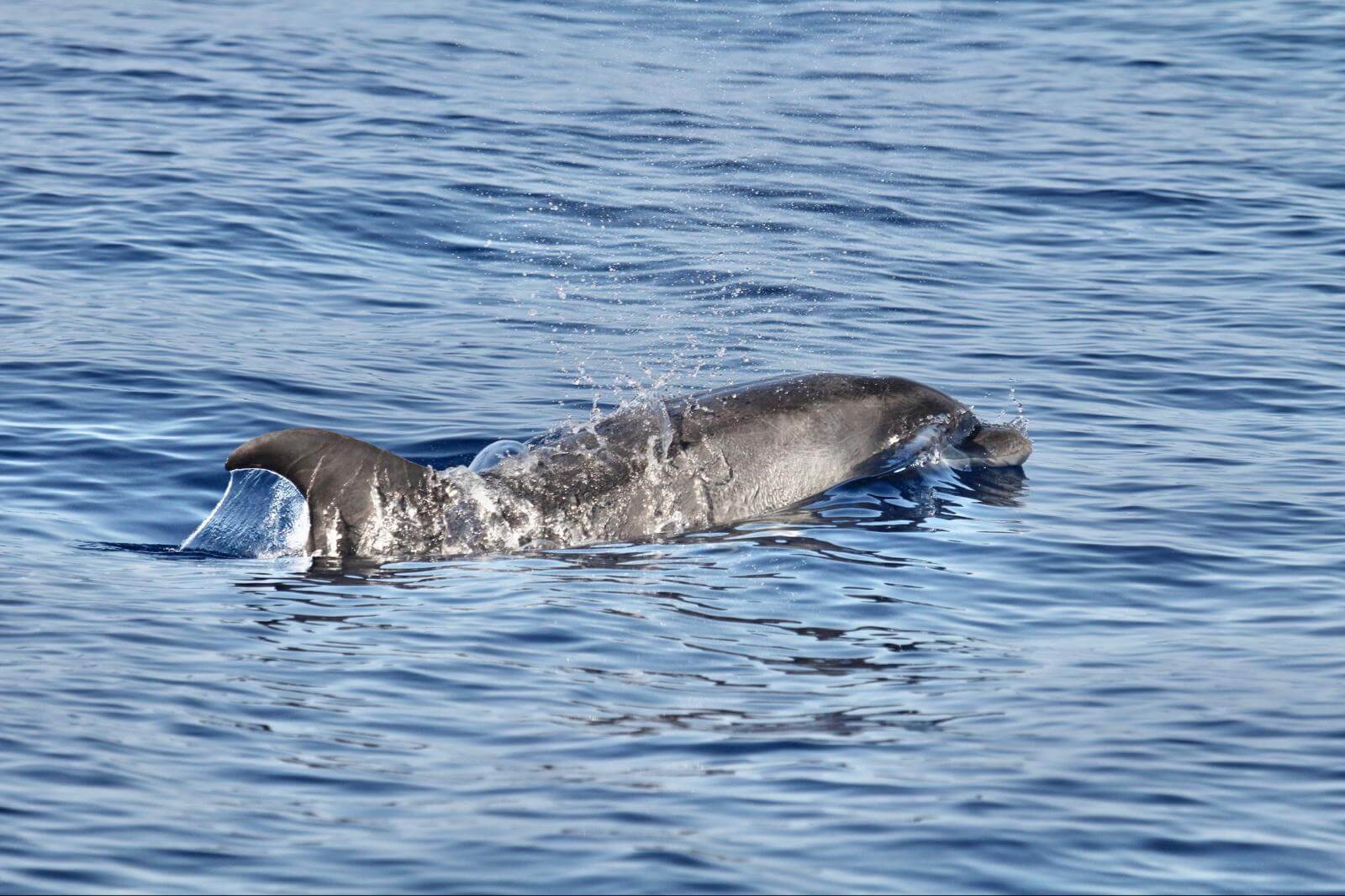
How to recognise a bottlenose dolphin
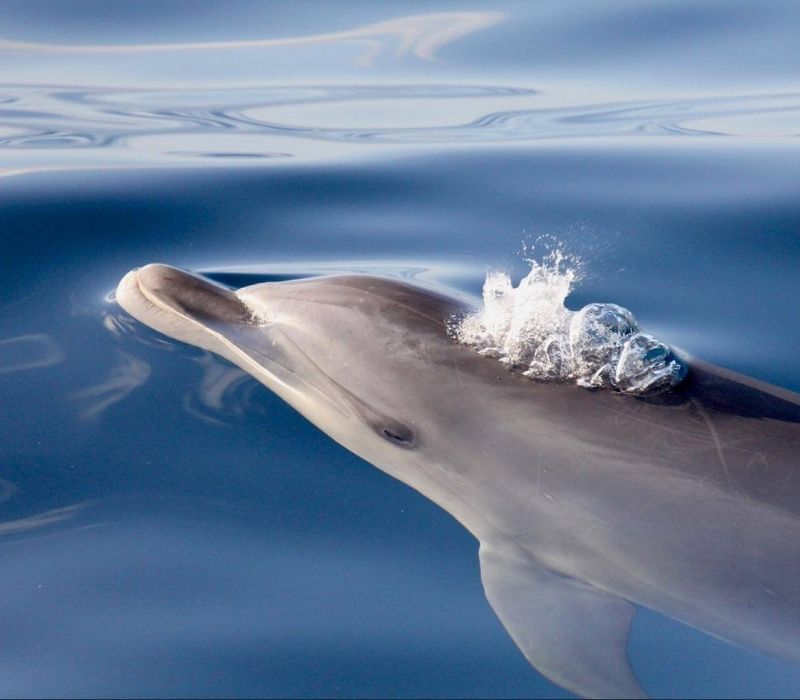
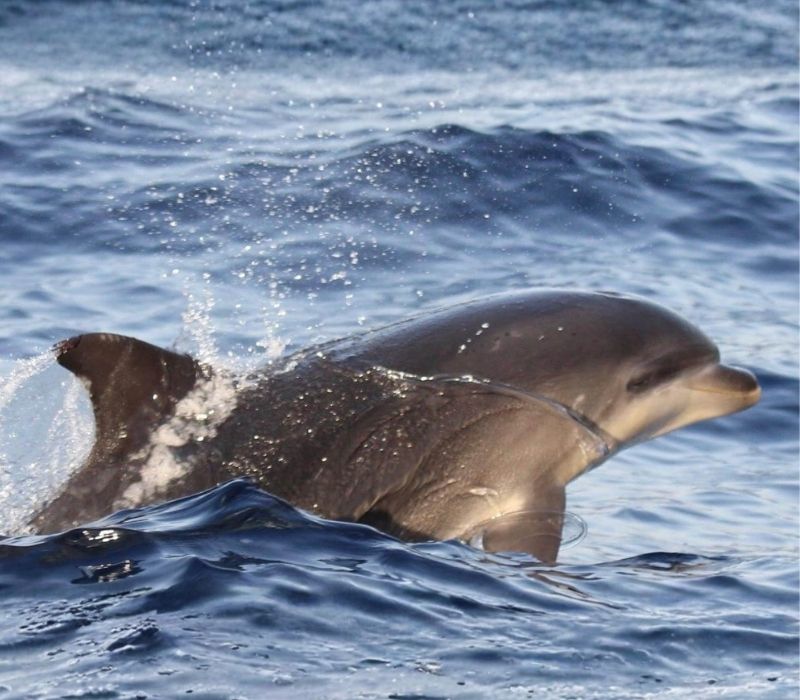
Bottlenose dolphins measure between 2.5 and 3.5 metres on average, with a robust grey body, darker on the back and lighter on the belly. Their most distinctive feature is the short, stubby beak that gives the species its English name and sets it clearly apart from other dolphins like the common dolphin or the Atlantic spotted dolphin.
Size and weight vary with sex, age and ecotype. Adult males are slightly larger than females, and oceanic ecotype individuals tend to be bulkier than their coastal counterparts. The curved, medium-sized dorsal fin is another useful field mark for telling them apart from short-finned pilot whales or rough-toothed dolphins.
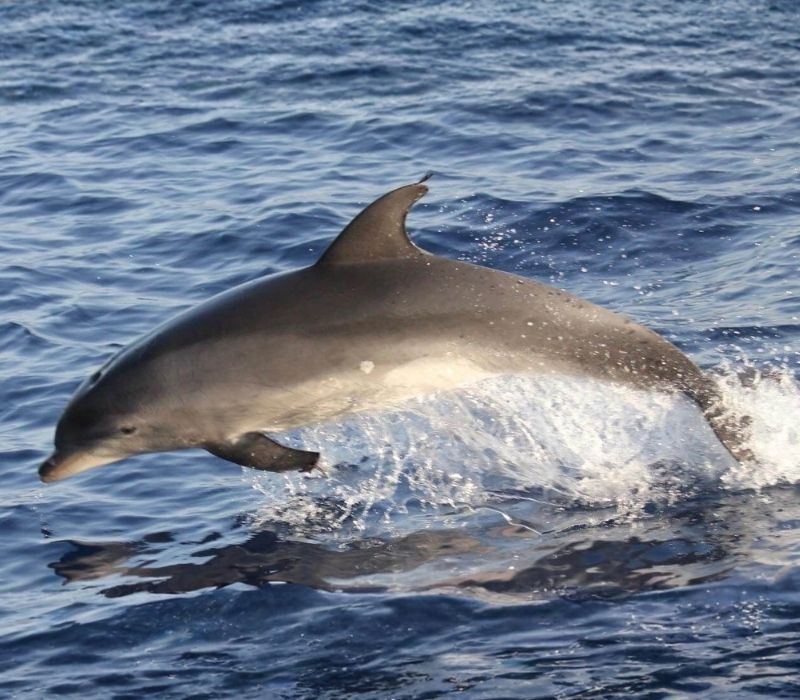
Leaps, curiosity and constant communication
Bottlenose dolphins live in pods that vary enormously in size — from a handful of individuals to groups of several dozen — and they reorganise constantly depending on what they are doing. Along with the short-finned pilot whale, they are among the most acrobatic cetaceans you will find off Costa Adeje: full leaps clear of the water, spy-hopping to poke their heads up and look around, and lobtailing, the sharp slap of the tail on the surface.
They communicate through a constant stream of whistles and clicks that work as a natural sonar system. Each bottlenose dolphin develops its own signature whistle, a kind of personal sound ID it uses to identify itself to the rest of the group. The younger ones in particular tend to be curious about the boat and will often come close for a look.
Hunting as a team, one fish at a time
Their diet is built around fish and cephalopods, with a preference for schools of fish that they round up and concentrate using cooperative hunting strategies. Several dolphins work together to herd a shoal against the surface or the shore, making it easier for everyone in the group to feed.
Echolocation is central to all of this. They produce high-frequency clicks that bounce back from their prey, building a precise acoustic picture of their surroundings — useful even in murky water or at night. A fully grown bottlenose dolphin can get through several kilos of fish in a day, though the exact amount shifts with their size, activity level and what is available locally.
Bottlenose dolphin vs. Atlantic spotted dolphin
Both species share the waters off Costa Adeje, but they are easy to tell apart once you know what to look for.
| Feature | Bottlenose dolphin (Tenerife) | Atlantic spotted dolphin |
|---|---|---|
| Size | Larger and stockier, 2.5–3.5 m | Smaller and more slender |
| Colouring | Plain grey, no spots | Body covered in light and dark spots |
| Beak | Short and stubby, bottle-shaped | Longer and more pointed |
| Behaviour | Curious, often approaches the boat | Highly acrobatic, large fast-moving groups |
Conservation status and threats
The bottlenose dolphin is listed as Least Concern on the IUCN Red List globally, though some local populations — including those resident in the Canaries — deserve closer attention. The main pressures they face are marine pollution, accidental capture in fishing gear and the growing intensity of maritime traffic.
The species is protected under the EU Habitats Directive and is one of the key conservation values of the ZEC Teno-Rasca Special Area of Conservation, part of the Natura 2000 network. At Big Smile Charters we operate in line with the Barco Azul protocol, maintaining proper distances and avoiding any manoeuvre that could disrupt the natural behaviour of the animals.
Did you know
- The bottlenose dolphin is one of the most intelligent animals in the ocean — tool use and self-recognition in mirrors have both been documented in the wild.
- Every individual develops its own signature whistle, a unique sound ID it uses to identify itself within the group.
- It is the species that played Flipper on TV and the most common dolphin in marine parks worldwide — though its real home is the open sea.
- In the Canaries, citizen science projects like those run by the Asociación Tonina are dedicated to tracking and studying these animals.
- They can reach 30 km/h in short bursts and leaps — a surprising turn of speed for an animal of their size.
See bottlenose dolphins from the water, not from the shore
The best way to watch bottlenose dolphins in Tenerife is on a small sailing boat — no loud engine, no crowds and a guide who knows these animals well. We leave from Puerto Colón every day and head out to the waters where these dolphins show up regularly. Groups of up to 10 people, premium catering included and sighting guaranteed.
