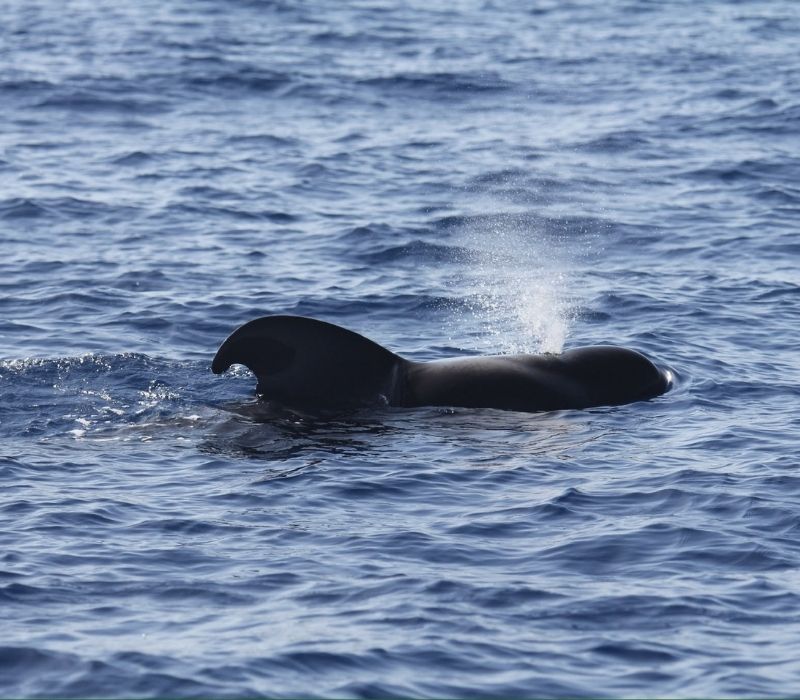


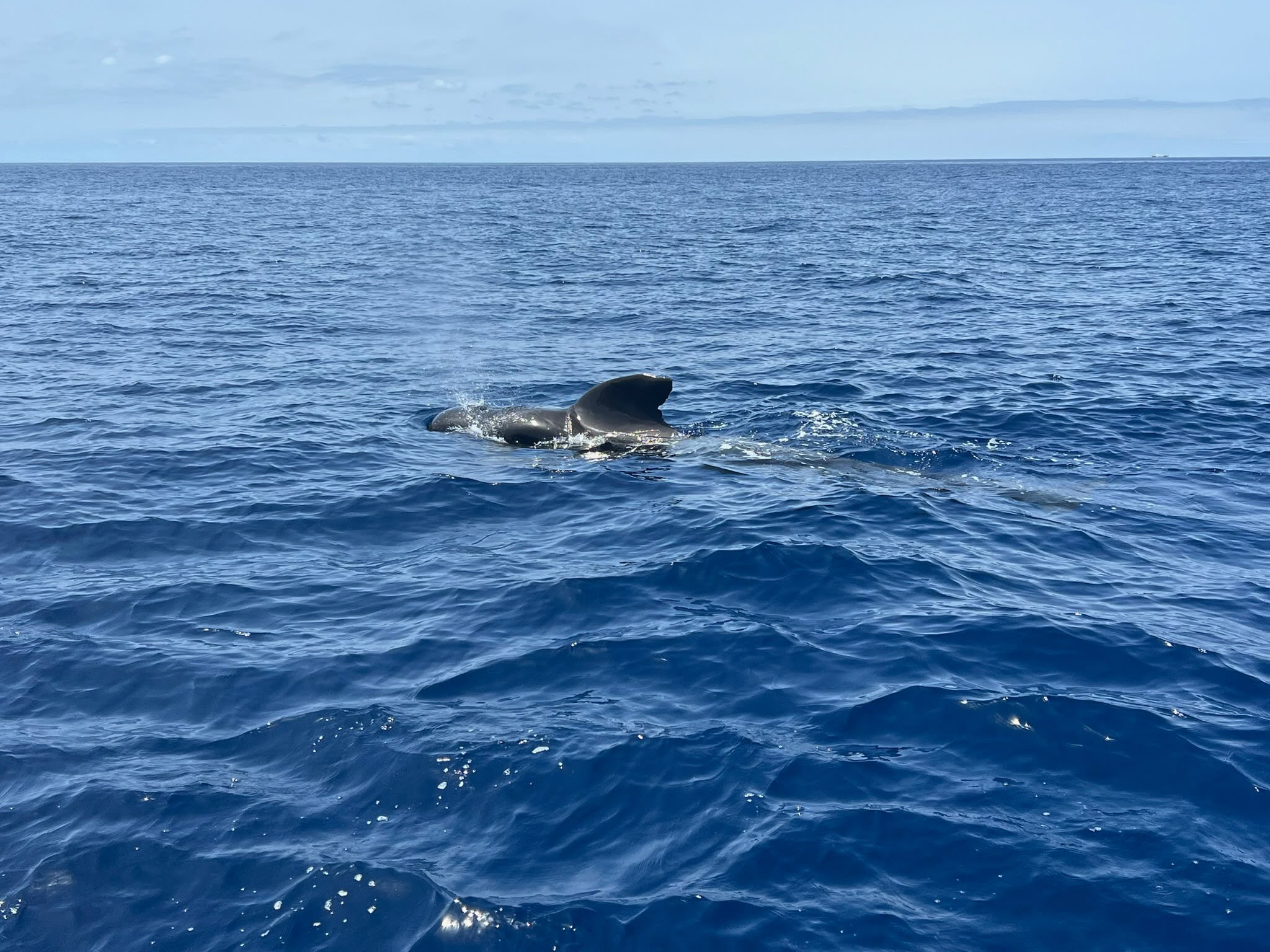
Short-finned pilot whale in Tenerife
Globicephala macrorhynchus · Calderón tropical · Kurzflossen-Grindwal
Species fact file
One of the largest resident colonies in the world, minutes from Puerto Colón
Head southwest from Puerto Colón and the chances of crossing paths with a group of pilot whales are very high. It happens almost every day out here.
The coast of Tenerife is home to one of the few resident populations of short-finned pilot whales on the planet. More than 400 identified individuals live here all year round, without migrating, in the same waters we sail through on every departure from Costa Adeje. Despite being called pilot whales, they are technically dolphins and belong to the same family as orcas. Some of these animals have been swimming these waters for decades.
Why Tenerife is their home
The underwater landscape off the southwest of Tenerife is unusual. The island drops sharply to depths of thousands of metres just a few kilometres from shore, creating submarine canyons packed with giant squid. Warm water, deep-water feeding grounds and an abundance of prey — everything a pilot whale needs is right here, with no need to go anywhere else.
With more than 400 photo-identified individuals along the southwest coast, this stretch of the Atlantic is one of the most reliable places in the world to see them. It is not a lucky encounter. It is an almost guaranteed meeting with one of the largest resident pilot whale colonies on earth.
How to recognise a short-finned pilot whale
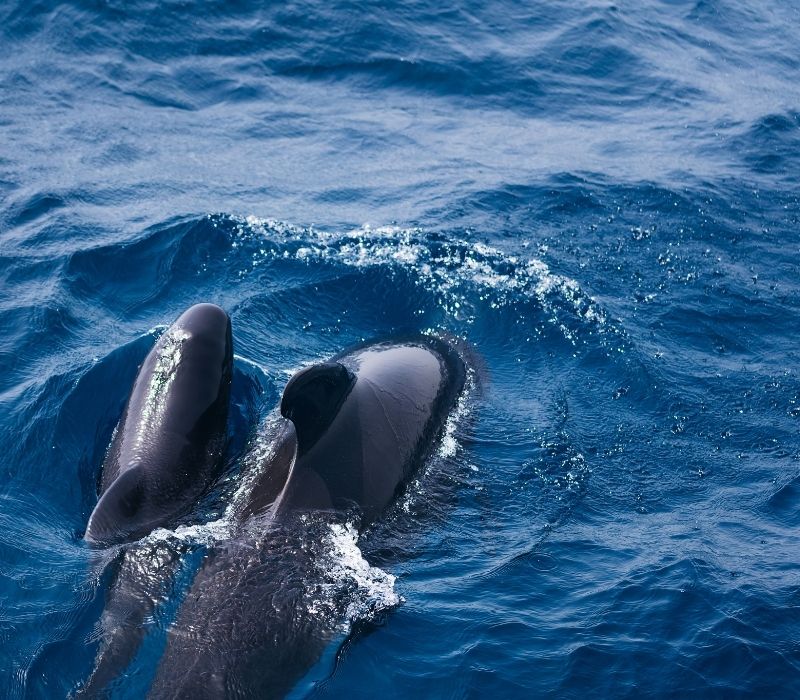
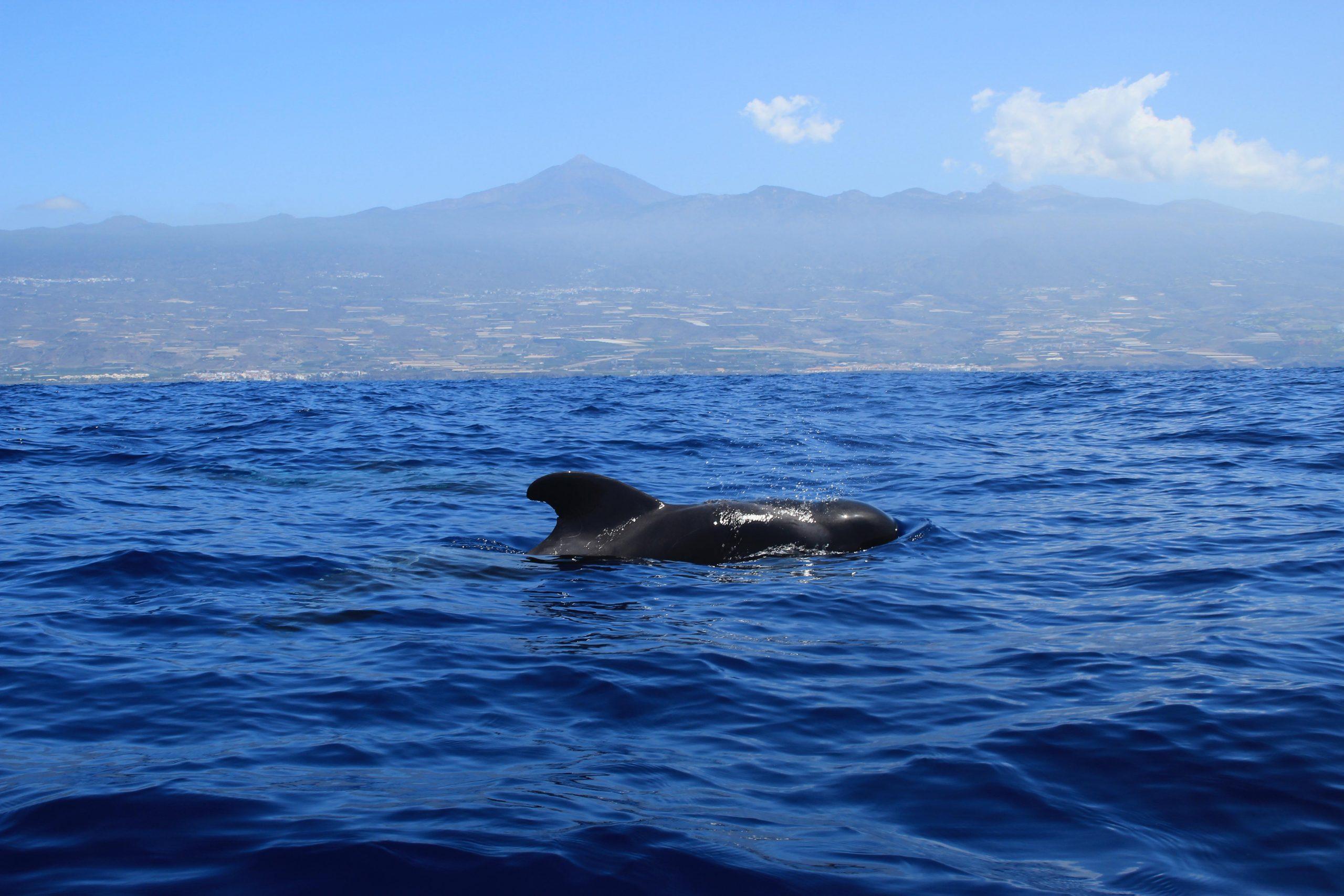
Pilot whales in the Canaries measure between 4 and 5 metres and can weigh over 3,000 kg. Males are noticeably larger, with a more developed melon and a tall, swept-back dorsal fin. The body is dark grey or black, with lighter patches just behind the dorsal fin.
That rounded bulge on their forehead is not just a physical trait. The melon is their echolocation organ — it produces clicks and focuses sound waves to detect prey in complete darkness far below the surface. On the Big Smile we carry hydrophones so you can hear them communicating while you watch them from the deck.
Clans that last a lifetime
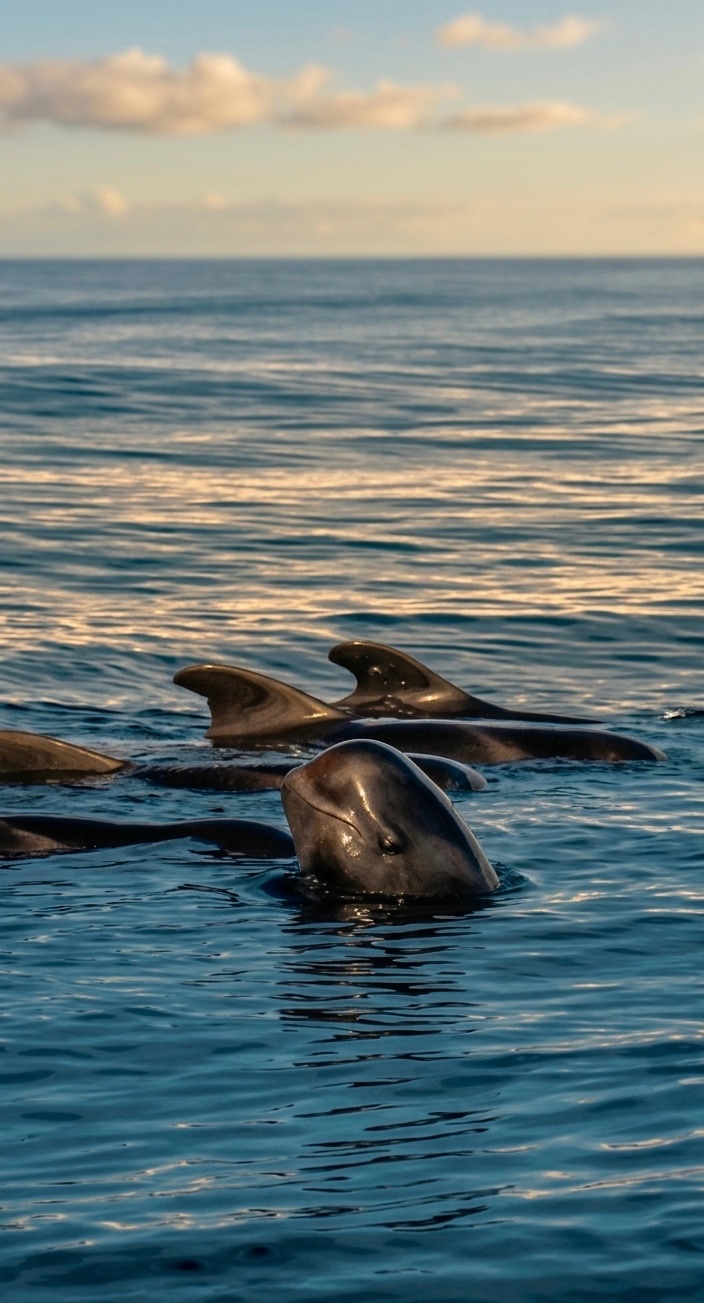
Short-finned pilot whales live in matrilineal pods of 10 to 30 individuals led by adult females. The bond between mother and calf is one of the strongest recorded among cetaceans. There are documented cases of females continuing to stay with their dead calves for days without leaving their side.
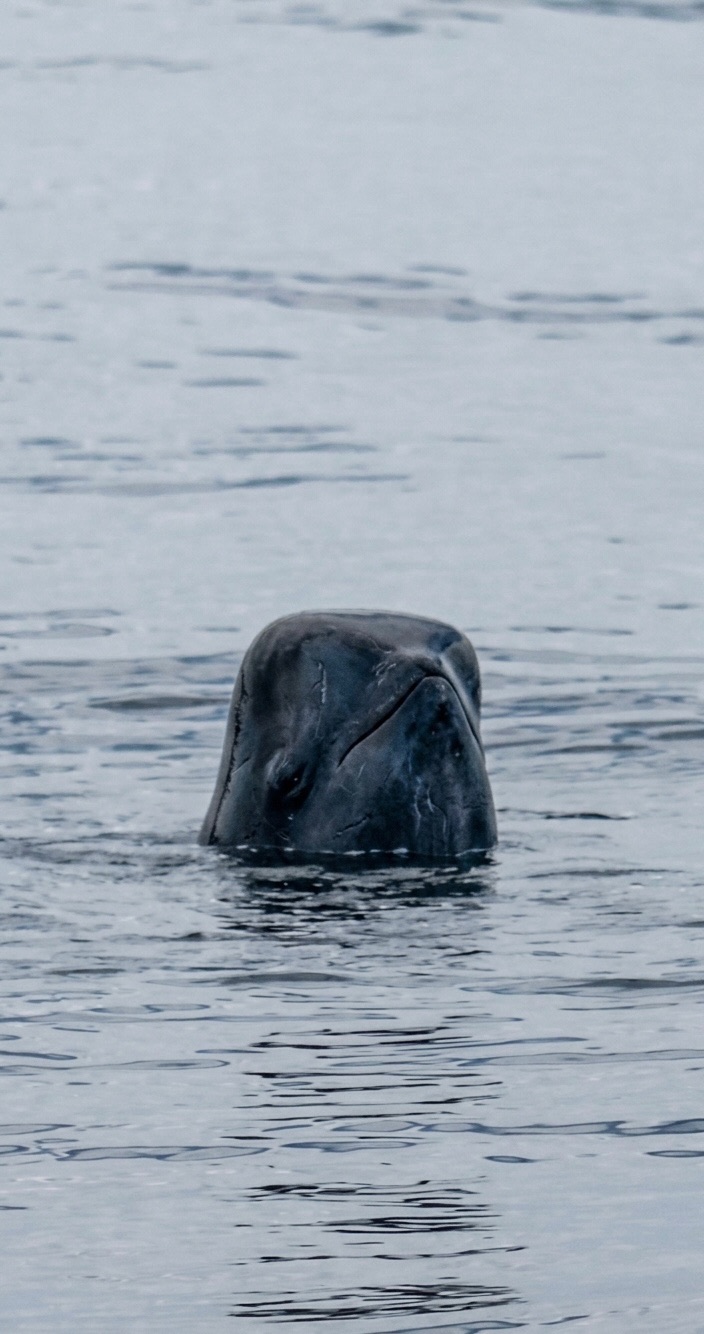
Within each pod, some females stay back with the calves while others go out to hunt. The young ones tend to be the most curious and it is not uncommon to see them approach the boat, lift their heads above the surface to take a look, or show off their pectoral fins. When you see them floating quietly at the surface, they are taking a brief rest to recover oxygen after a deep dive.
Deep-water hunters
Their main food source is giant squid. To catch them, they dive between 300 and 700 metres in Canarian waters and reach speeds of up to 9 metres per second in pursuit — making them the fastest cetaceans at depth, comparable to a cheetah at full sprint on land.
After hunting they come back up quickly to breathe. Dives around the Canaries typically last between 10 and 12 minutes. During that time they move through total darkness, guided entirely by their echolocation system, using the melon like a precision sonar.
Short-finned vs. long-finned pilot whale
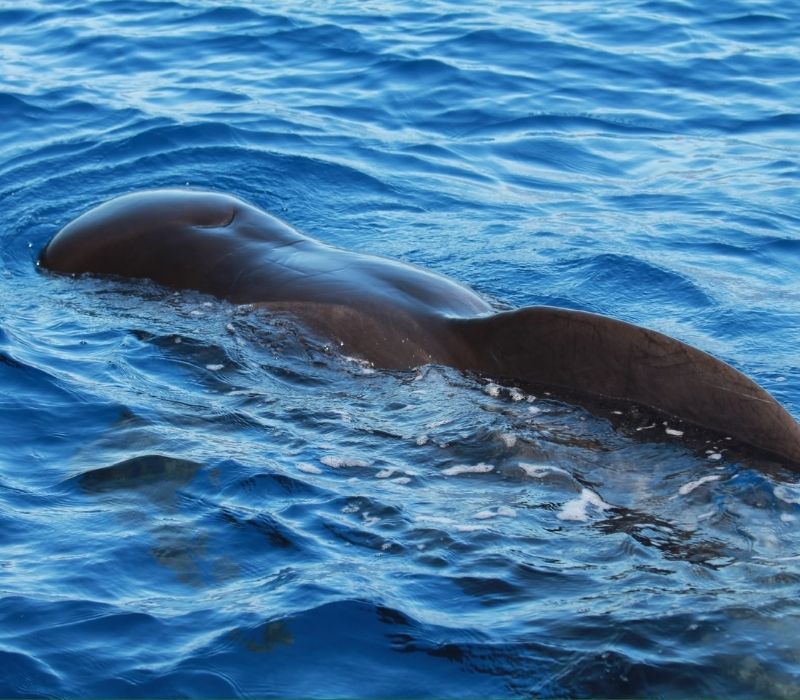
There are two species of pilot whale. The one that lives in Tenerife is the short-finned pilot whale. Its relative, the long-finned pilot whale, inhabits colder waters and rarely reaches the Canary Islands.
| Feature | Short-finned pilot whale (Tenerife) | Long-finned pilot whale |
|---|---|---|
| Distribution | Tropical and subtropical waters — resident in the Canaries | Cold and temperate waters of the North Atlantic |
| Dorsal fin | Tall and swept back | Shorter and more upright |
| Behaviour | More active and acrobatic | Calmer, less likely to breach |
| Presence in Tenerife | Year-round permanent resident | Rare or absent |
Threats and conservation
The Canarian population is considered stable, but it faces real pressure. Between 1991 and 2007, 59 short-finned pilot whales were injured or killed in collisions with vessels in the Canaries. Underwater engine noise disrupts their echolocation and the build-up of boats around a pod creates a level of stress that is easy to miss but always present.
Tenerife has strict whale watching regulations that govern how vessels may approach cetaceans. At Big Smile Charters we follow them without exception. We never surround or chase the animals, we keep proper distances and we carry hydrophones on board so you can listen to them without disturbing their behaviour.
Did you know
- Despite being called pilot whales, they are technically dolphins and share a common ancestor with orcas.
- They reach 9 m/s underwater when hunting — the same top speed as a cheetah on land.
- Females can live up to 60 years and know every corner of their marine territory.
- Their loyalty to the pod runs so deep that pilot whales rarely change clan throughout their entire lives.
- Some individuals identified in the Canaries have been swimming the Costa Adeje channel for decades.
See pilot whales from the water, not from the shore
The best way to watch short-finned pilot whales in Tenerife is on a small sailing boat — no noisy engine, no crowds, and a guide who knows these animals well. We leave from Puerto Colón every day and head out to the waters where these cetaceans have been living for generations. Groups of up to 10 people, premium catering included and sighting guaranteed.