
Striped dolphin in Tenerife
Stenella coeruleoalba · Delfín listado · Blau-Weißer Delfin
Species fact file
The fastest and most acrobatic dolphin you can see in Tenerife
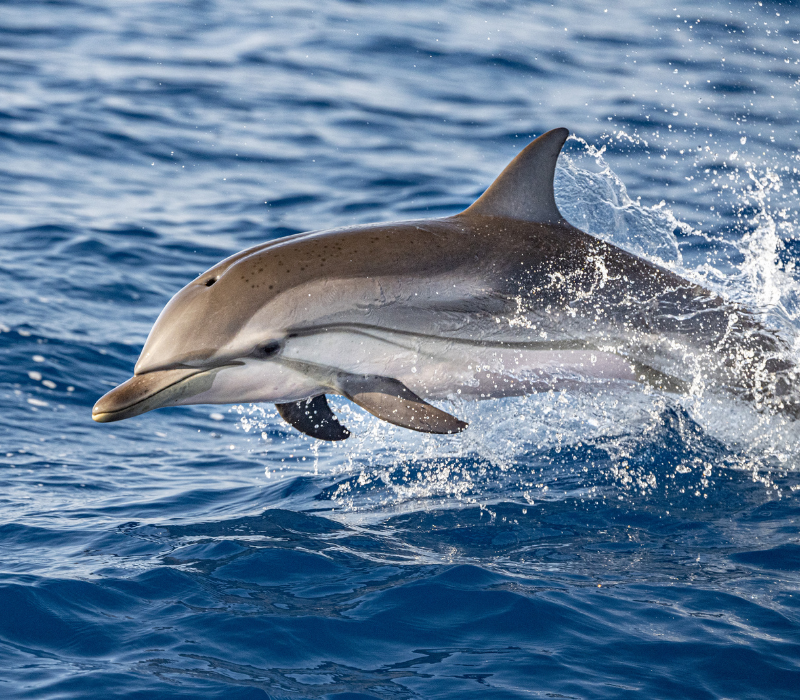
When striped dolphins show up, you know it straight away. They come in fast, leap high and never stop moving. They are one of the most spectacular cetaceans in the waters off southwest Tenerife — even if their appearances are not guaranteed.
Stenella coeruleoalba is one of the most abundant dolphin species in the Mediterranean and North Atlantic, but around Tenerife it behaves more like an occasional visitor than a resident. It tends to appear in open water, usually in large groups and with an energy that contrasts sharply with the calm of pilot whales or bottlenose dolphins. Seeing them from the deck of the Big Smile is one of those moments people talk about long after the trip.
Where striped dolphins live
The striped dolphin favours deep, temperate open-ocean water, well away from the coast. Its natural habitat is out at sea, where the water column drops to over 1,000 metres and currents bring an abundance of pelagic fish and squid. In Tenerife that means the deeper offshore areas, the same oceanic corridors used by fin whales and sperm whales.
Among the dolphin species found in Tenerife, the striped dolphin is the most oceanic of all. Its presence in the channel between Tenerife and La Gomera is occasional but real, particularly during periods of higher pelagic activity. Across the Canary Islands the species is well documented, with regular records throughout the archipelago year-round.
How to recognise a striped dolphin
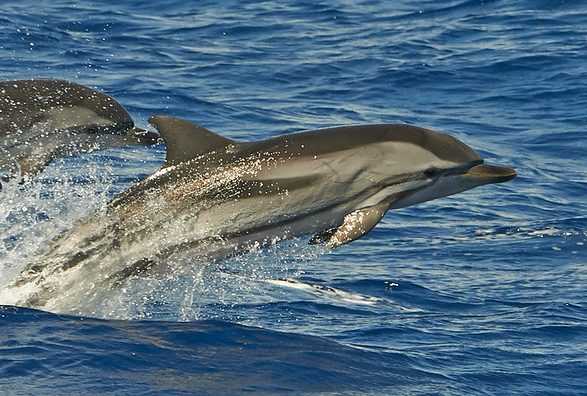
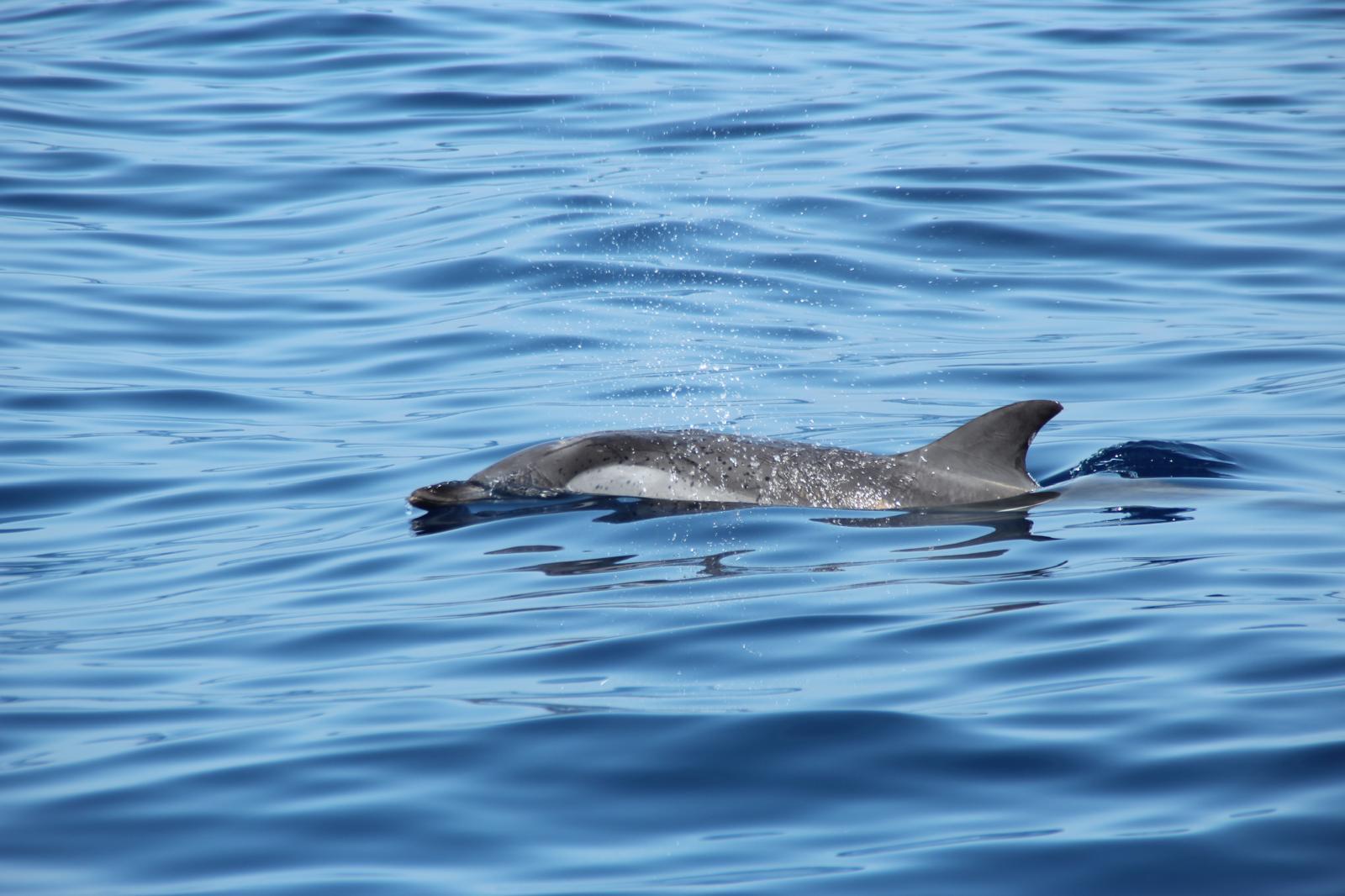
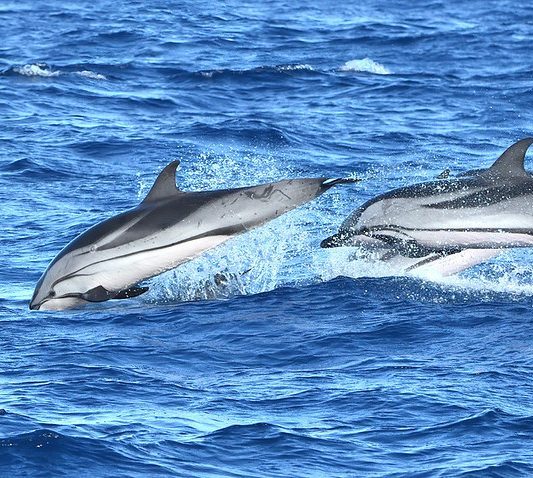
The striped dolphin is smaller and more slender than the bottlenose dolphin, measuring between 1.8 and 2.5 metres and weighing between 90 and 150 kg. What catches your eye immediately is its colouring: dark bluish-grey back, white belly and two well-defined lateral stripes — one blue running from the eye to the tail and a lighter one crossing the flank. It is the only dolphin in the Canaries with that sharp, clean pattern, which makes it unmistakable the moment it leaps.
Its beak is longer and finer than the bottlenose dolphin's, and the dorsal fin is tall and curved. The size is also noticeably smaller than the short-finned pilot whale, which helps to tell them apart on the rare occasions both species appear in the same area off Costa Adeje.
Large groups, boundless energy
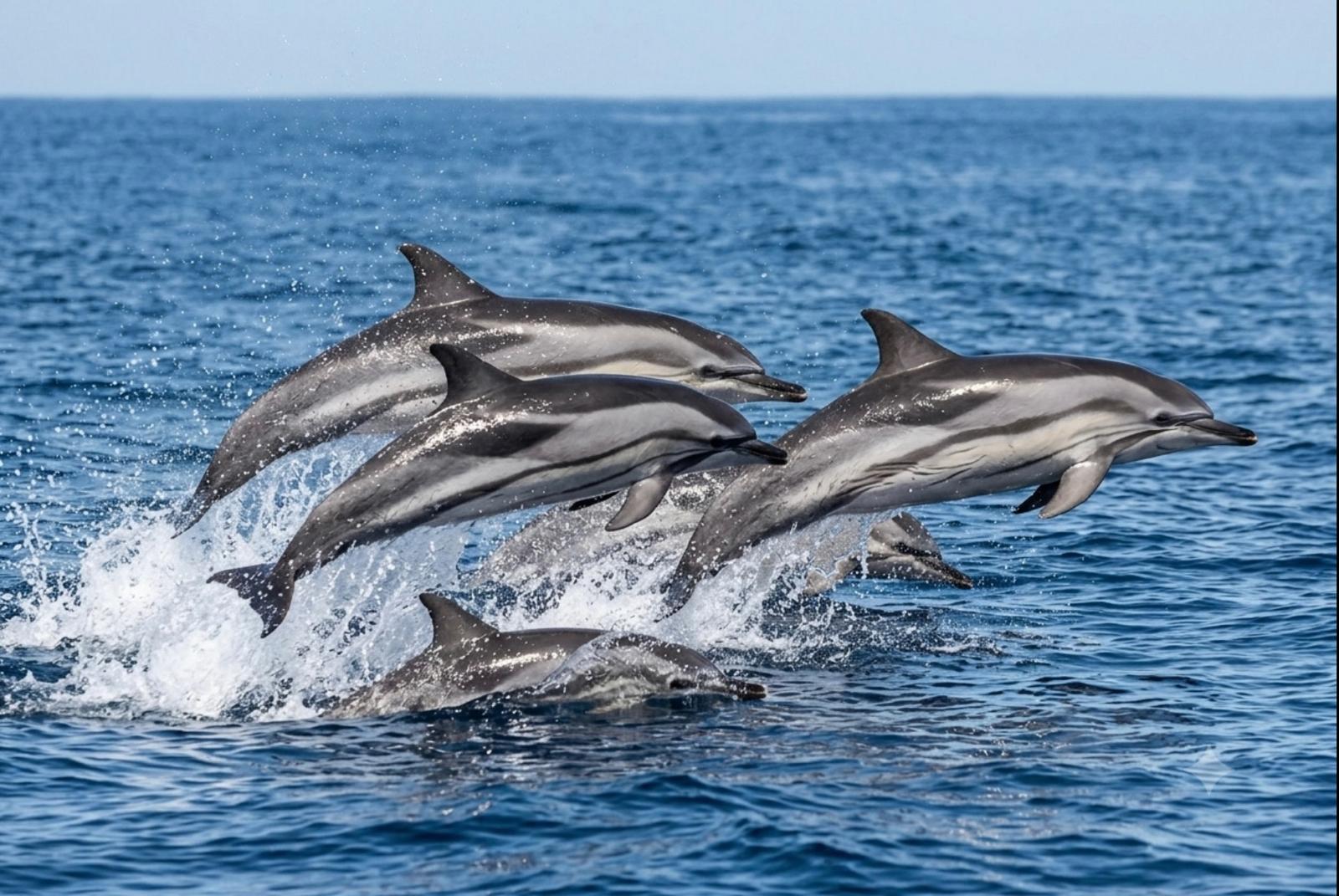
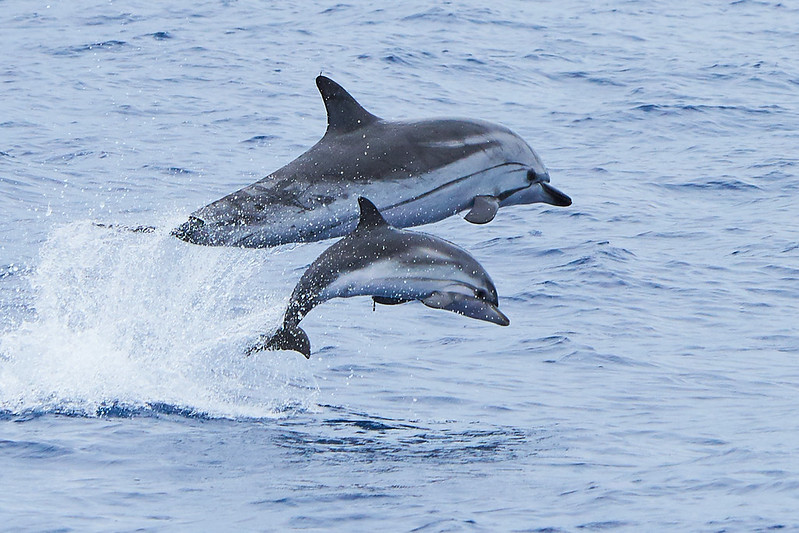
The striped dolphin's behaviour is one of the most striking among all the cetacean species in Tenerife. They live in groups ranging from a few dozen to several hundred individuals, and when they move they do it together, fast and with a coordination that looks almost choreographed. The leaping is constant — most of it with no apparent reason beyond sheer enthusiasm.
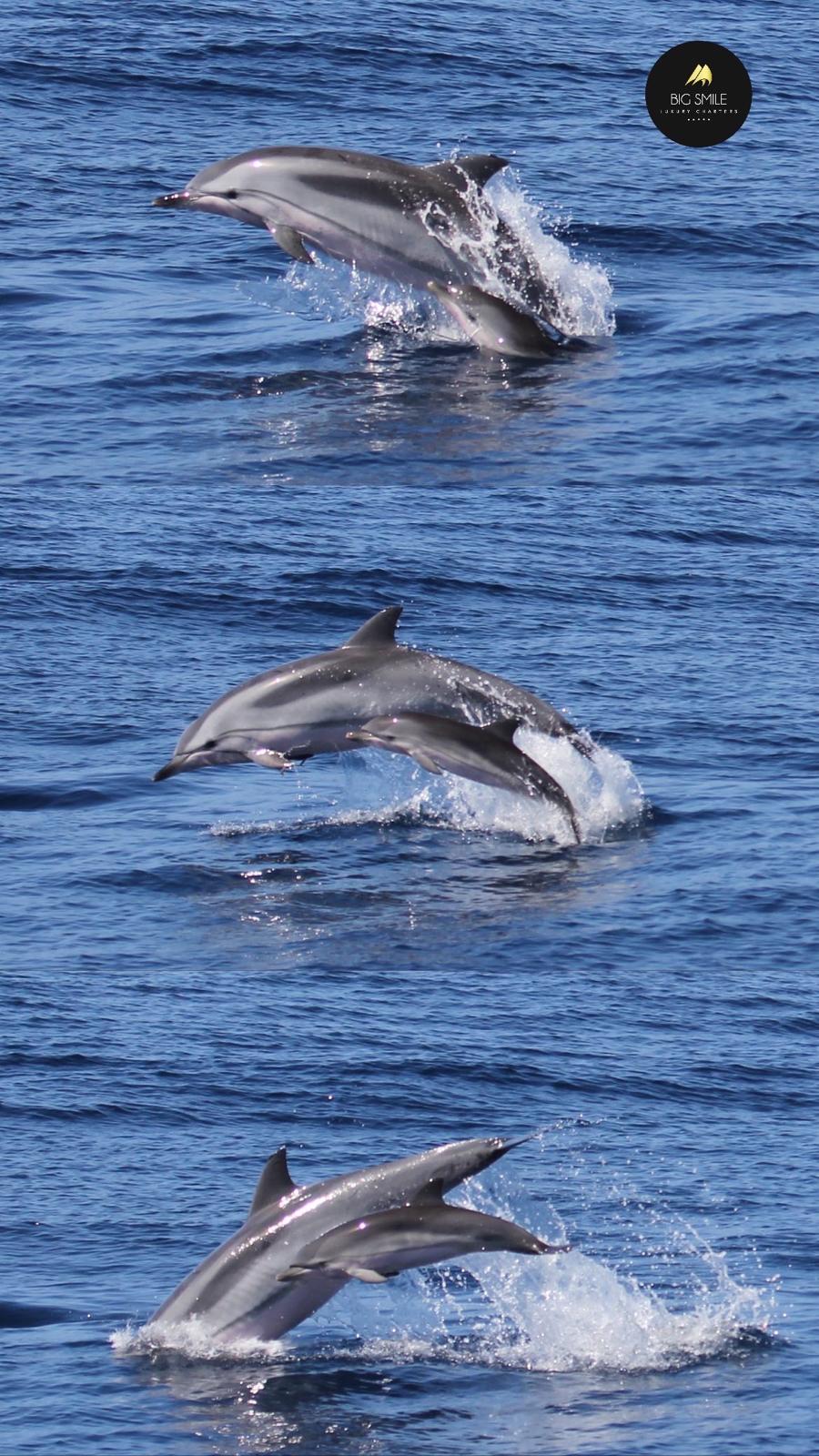
They are very active at the surface: they leap, spin, perform acrobatics and come alongside vessels to bow-ride. When a large group appears near the Big Smile, the whole deck goes quiet. It is one of those sightings that stays with people even if they have already seen pilot whales or bottlenose dolphins that same day.
Night hunters in deep water
Their diet varies with location and season, but it centres on pelagic fish and cephalopods, particularly squid and cuttlefish. A significant part of their hunting happens at night, when prey migrates vertically towards shallower water as darkness falls.
Their speed — which can exceed 40 km/h — is a key hunting advantage. They can pursue fast-moving shoals and manoeuvre with precision in open water. Like all delphinids, they use echolocation to navigate and locate prey even in complete darkness.
Striped dolphin vs. bottlenose dolphin
Both are among the dolphin species most commonly found in the Canary Islands, but they have very different personalities. If you see them side by side, the difference is immediate.
| Feature | Striped dolphin | Bottlenose dolphin |
|---|---|---|
| Size | Smaller and more slender, 1.8–2.5 m | Larger and stockier, 2.5–3.5 m |
| Colouring | Blue-grey with distinctive white lateral stripes | Plain grey, no stripes |
| Behaviour | Highly acrobatic, large fast-moving groups | Calmer, curious, often approaches the boat |
| Sighting in Tenerife | Occasional, open water | Frequent, close to Costa Adeje |
Conservation and threats
The striped dolphin is listed as Least Concern by the IUCN globally, though Mediterranean populations have suffered serious mass mortality events linked to morbillivirus. In the Atlantic waters around the Canaries the situation is more stable, though marine pollution, accidental bycatch and underwater noise remain the main pressures on the species.
Dolphin watching in Tenerife is regulated by regional law. On board the Big Smile we follow the Barco Azul protocol on every departure, regardless of which species appears. If a group of striped dolphins shows up, the same careful approach applies as with any other cetacean.
Did you know
- The striped dolphin is one of the most abundant dolphin species in the world, with populations estimated in the millions across the Atlantic and Mediterranean.
- It can exceed 40 km/h, making it one of the fastest cetaceans at the surface.
- The lateral stripes that give the species its name are unique to each individual and are used in photo-identification studies.
- They are highly social animals that form superpods of several thousand individuals in the open ocean.
- While striped dolphin sightings in Tenerife are occasional, when they do appear they tend to arrive in large groups with a lot of surface activity — making them one of the most impressive encounters possible on a whale watching trip here.
Can you see striped dolphins on a whale watching tour?
Yes, though their appearance is not guaranteed. What is guaranteed on every Big Smile departure is a cetacean sighting — with short-finned pilot whales and bottlenose dolphins as the regulars, and striped dolphins as one of those welcome surprises. Departures from Puerto Colón, groups of up to 10 people and premium catering included.